Ibadan – Colonialism didn’t exit through the front door. It rebranded, went remote, and embedded itself into systems we now call normal.

Long after flags were lowered and anthems rewritten, colonial influence continues to shape who holds power, which voices are legitimised, and how people see themselves.
This isn’t nostalgia. It’s a systems audit.
Power: Independence Without Control
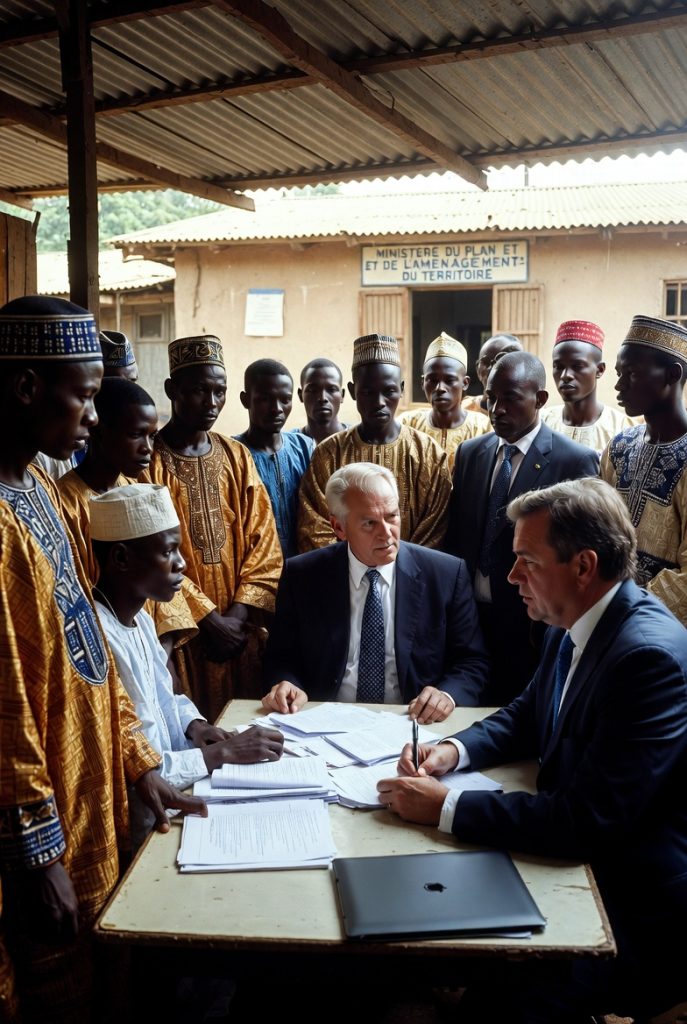
On paper, many nations are sovereign. In practice, power often still answers to old templates.
Colonial administrations were designed for extraction, not development. They centralised authority, rewarded loyalty to the centre, and weakened indigenous governance structures.
Post-independence governments inherited these systems wholesale—same bureaucracy, same hierarchy, same command-and-control mindset.
The result?
Overcentralised governments
Fragile institutions
Power concentrated in elites groomed to operate colonial-style systems
Political independence happened. Institutional decolonisation largely did not.
Power today still speaks the language of colonial legitimacy—titles, structures, and validations imported from elsewhere.
Language: The Original Gatekeeper
Language remains one of colonialism’s most effective long-term tools.
English, French, Portuguese, and Spanish dominate:
Government
Education
Law
Media
Corporate spaces
Indigenous languages are often sidelined as informal, local, or unprofessional. That hierarchy sends a clear signal: to be taken seriously, you must sound colonial.
This has real consequences:
Children learn to think critically in foreign languages
Indigenous knowledge systems lose prestige
Intelligence becomes associated with accent, not insight
When a society’s ideas must pass through a foreign language to be validated, mental sovereignty is compromised.
Identity: The Quiet Crisis
Colonialism didn’t just redraw borders; it reframed self-worth.
For decades, colonised people were taught—explicitly and subtly—that:
Their cultures were backward
Their religions were inferior
Their aesthetics were uncivilised
Those narratives didn’t vanish with independence. They mutated.
Today, identity conflicts show up as:
Preference for foreign validation
Internalised inferiority
Cultural shame disguised as “modernity”
A constant need to explain oneself to the world
Many societies are still negotiating who they are—through lenses handed down by those who once ruled them.
Education: Curriculum as Control
What a society teaches reveals what it values.
Colonial education systems prioritised:
European history over local history
Western philosophy over indigenous wisdom
Imported heroes over local thinkers
Decades later, many curricula still mirror this imbalance. Students can recount European wars in detail but struggle to name pre-colonial political systems, scientists, or innovators from their own regions.
That’s not accidental. Control the narrative, and you control ambition.
The Psychological Aftermath
Colonial hangovers are not just structural—they are psychological.
They manifest as:
Overdependence on foreign solutions
Distrust of indigenous systems
The assumption that progress must look Western
A fear of redefining success on local terms
This is why development often feels like imitation rather than innovation.
So, What Does Decolonisation Actually Mean?
Not slogans. Not aesthetics. Not performative outrage.
Real decolonisation looks like:
Rebuilding institutions to serve people, not extraction
Elevating indigenous languages in formal spaces
Teaching history from local perspectives
Valuing homegrown knowledge alongside global ideas
Redefining progress based on context, not comparison
It’s not about rejecting the world.
It’s about engaging the world from a position of self-awareness and confidence.
The Bottom Line
Colonialism may be historical, but its consequences are operational.
Power, language, and identity today are still negotiating deals signed centuries ago. Until societies confront these inherited frameworks honestly, independence will remain symbolic—and development will remain conditional.
You can’t build a future on borrowed self-worth.
And history, whether acknowledged or not, is still in the boardroom.