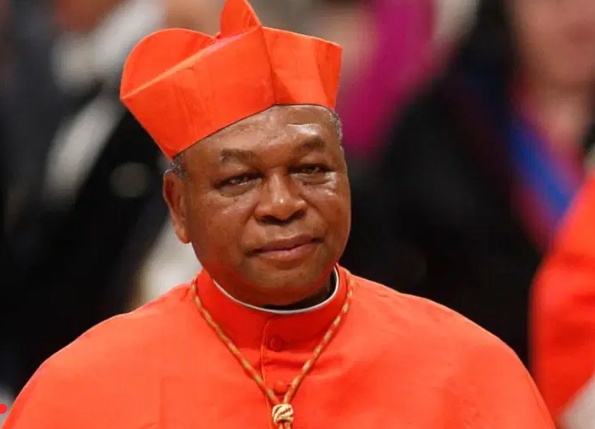
Enugu – THE judiciary and its increasingly prominent role in determining the outcome of Nigerian elections came under intense scrutiny at the 22nd All Nigeria Editors Conference, ANEC, in Enugu, on Thursday, with leading voices warning that democracy was weakened when the courts become the arena in which electoral victories were finally decided.
From the keynote address by Catholic Archbishop Emeritus of Abuja, John Cardinal Onaiyekan, to the interventions of former Nigerian Bar Association President, Mazi Afam Osigwe, SAN, and political economist, Prof. Patrick Utomi, the conference repeatedly returned to one troubling question: Should the courts be deciding who governs Nigerians after voters have supposedly made that decision at the ballot box?
The question acquired particular urgency against the background of the 2027 general elections and concerns over declining public confidence in electoral institutions.
The conference, organised by the Nigerian Guild of Editors, NGE, was held under the theme, “The Ballot, the Media and the Task of Keeping Democracy Alive,” with the sub-theme, “When Lies Look Real: Detecting and Debunking AI Misinformation Before, During, and After Elections.”
Other key personalities, who spoke at the well-attended event included President of NGE and Editor of Vanguard Newspapers, Mr Eze Anaba; Minister of Information, Mohammed Idris; Obi of Onitsha, Igwe Alfred Achebe; and governor of Enugu State, Dr Peter Mbah.
The conference was also attended by Governor Umar Namadi of Jigawa State; Deputy Governor of Enugu State, Ifeanyi Osisi; Vanguard publisher, Uncle Sam Amuka; former governor of Ogun State, Aremo Olusegun Osoba; and Information Minister, who was represented by Ali. M Ali, the MD of NAN,
Others include Prof. Auwal Yadudu, SAN; Chief Onyema Ugochukwu; Tunde Rahman; Prof. Stella Ọkunna, and INEC chairman, Joash Amupitan, who was represented by Enugu REC, Chukwuemeka Chukwu.
Delivering the keynote address, Onaiyekan said democracy was ultimately about government serving the people, adding that elections should provide the mechanism through which people were elected.
He expressed concern that Nigeria’s electoral system had evolved into one in which the courts increasingly became the final battleground for political contests.
According to him, the judiciary was originally intended to adjudicate disputes arising from elections, not to become the institution through which electoral victories were effectively determined.
“The judiciary is supposed to be the last stage in the electoral process. It should be stressed that the judiciary is not to determine elections about who wins, but rather to adjudicate disputes when they arise,” he said.
He argued that if elections were properly conducted, there should be little need for prolonged litigation.
“If elections were well conducted, there ought not to be any need for judicial cases. The tribunals were supposed to be there just in case.”
But, according to him, Nigeria’s recent experience had produced an uncomfortable reversal.
Onaiyekan said: “Our experience in the recent past has almost become that we have been witnessing a situation where our elections are being determined not at the polls, but in the courts by the tribunals.’’
He said the development had created opportunities for highly paid lawyers to exploit technicalities in prolonged legal battles.
“This gives a field day for high-class lawyers with high-level fees, doing their best to manipulate issues on technicalities,” he said.
The Cardinal also expressed concern over allegations of unjust judgments in election tribunals, saying such perceptions had damaged public confidence in one of the country’s most important institutions.
“There are allegations that are difficult to deny of unjust judgments by some judges in election tribunals,” he said, adding that the performance of the judiciary in recent elections had “seriously dented the image of this hallowed institution.”
He said efforts must be made to restore public trust in the courts.
Among others, Onaiyekan, who urged the media to resist pressure and uphold democracy, called for electoral reforms, independent INEC, and for a candidate to score at least 50 per cent of votes cast to be declared winner of a presidential election.
Onaiyekan’s seven-point reform agenda
Onaiyekan proposed a series of reforms aimed at reducing the dependence of Nigeria’s electoral system on post-election litigation.
Among them was the creation of a special election tribunal dedicated exclusively to electoral cases and required to dispose of petitions within a defined period.
While arguing that that election disputes should be resolved before elected officials assumed office, the cleric said: “More seriously, we must do all that is necessary to dispose of all tribunal cases before swearing in any candidate.’’
He questioned the fairness of a system in which a declared winner assumed office and then used the machinery and resources of government to defend the victory in court against an opponent.
Source: Vanguard News